The post Using geolocation to bring history to life appeared first on edugameshub.
]]>I work at GuidiGO, a Franco-American company whose focus is to bring culture and heritage to everyone by reinventing the traditional guided tour on mobile devices. GuidiGO is a platform that allows every museum or storyteller to create guided tours with both rich content and geolocalized games using the most advanced abilities of smartphones and tablets. This platform includes a dedicated CMS which is as easy to use as a blog editor. One of our main concerns is children and how to keep them interested during a tour when most of them find museums and heritage sites pretty boring. This raises another question: how to find the right balance between fun and quality content?

A screen from GuidiGO featuring a child’s drawings.
Since GuidiGO makes the publication of cultural games more accessible, some new experiments quickly popped to our minds. When I was at school, I remember visiting exhibitions, pen and paper in hands, filling in forms, ticking boxes and drawing architecture details. Today, teachers have a more powerful way to get their students’ attention: they can prepare a school tour by creating a cultural game that will include audio storytelling, images and videos, but also appealing challenges based on image recognition and augmented reality.
Giving children the tools to make their own game
Instead of giving children a content made by their teacher, why not involve them right from the game creation stage? At the time of this experiment, I was still a student in history, heritage and education. I wanted to test if such project could awake the children’s curiosity for their local heritage. I conducted the experiment with a fellow student, Elsa, who is also working on bringing archeology to the young masses. We worked with a group of 26 children aged 7 to 9. First, we took them to an exhibition in a local museum to make them discover, on tablets, some gaming experience we had created with GuidiGO. Then, Elsa proposed an active guided tour of the city focused on Antiquity and the Middle Ages. At the end of this first day, there was the deal: now that they had tested the app and learned a lot about their city’s history, they had to create their own game to pass on this knowledge to other children.
At first they thought it was impossible. We tried to reassure them and make them comfortable by establishing a few simple rules: anyone willing to participate could do it, there would be no obligation, and no idea or answer would be considered as wrong or stupid. They quickly understood that when you need to be creative, e.g. to design the game process, the craziest idea can sometimes turn out to be a good starting point.
We began with a brainstorming session, engaging the whole group, to imagine the global story, define the path in the city and the number of stops. A lot of great ideas came from the children who finally settled on this simple scenario: one of them, Caesar, shares his family name with an historic character Elsa told them about during the tour. From there, they developed a story where you have to walk throughout the city in Caesar’s shoes, trying to find his ancestor’s daughter after a time travel. At each stop visited, you meet a relevant character who explains what the place used to be and who challenges you. Challenges are rewarded with clues allowing to reach the next stop.

A student using GuidiGO
After this first stage, the teacher divided the classroom into groups of 3 or 4, each with the responsibility of creating one stop. This was great teamwork since everyone did something; and there was a lot to do! The children first wrote the dialogue between Caesar and their character. Then they played it in front of microphones and drew the scene. When it came to imagining challenges, they managed to diversify them pretty well, not sticking to the obvious MCQs. Some group used the image recognition feature, asking you to search for a piece of architecture and then scan it to make sure you found the right one. Another group invited you to search answers on some urban heritage signs. Once they had the audio files, images and challenges ready, the children uploaded the whole content themselves in GuidiGO Studio. They eventually downloaded their cultural game on tablets and tested it with their friends and families.
The children got really interested in their hometown’s heritage and their parents were happy to see them so excited about a history project. The teachers could also witness a new motivation and at the end of the project, you couldn’t tell which children were usually shy and reluctant to participate in class. The results perfectly match the benefits Project Based Learning advocates cry out for.
The post Using geolocation to bring history to life appeared first on edugameshub.
]]>The post UK edugames startup Nightzookeeper raises 440K appeared first on edugameshub.
]]>Hello Nightzookeeper! Since June you’ve raised 440K – well done! How have you managed this and what can other startups learn from your approach?
You have a new website launching in November – can you give us a sneak peek?

The Midnight Market
There is also talk of Nightzookeeper Japan – what will this involve and will it be very different from NZK as it is now?
Finally, what was it like to meet Boris Johnson, London’s eccentric mayor?
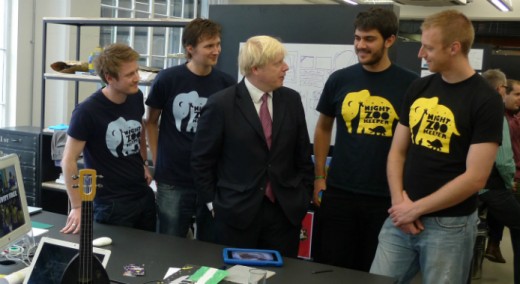
Nightzookeeper team with London Mayor Boris Johnson

The post UK edugames startup Nightzookeeper raises 440K appeared first on edugameshub.
]]>The post Lessons from Littleloud: Failure? What failure? appeared first on edugameshub.
]]>Until last year I was Creative Director of a company called Littleloud. Through thirteen long years we forged through many highs and lows. We made things like this.

Here’s a game about Georgian London and hanging people. (Bow Street Runner)
And we also made things like this.

Here’s a game about making clothes and children as handily cheap resources. (Sweatshop)
So part of our work was creating what could be called educational games. Bow Street Runner, The Curfew, Sweatshop, Sticks and Stones. Occasionally this went well. Occasionally this went not so well. Sometimes we made money on these projects and sometimes we didn’t. Occasionally these efforts we were rewarded by shiny trinkets and orbs that affirm that lo, our work was good.
So that was us. Now let’s talk about failure.
The problem is that the term fail (fail fast, fail often etc etc) is thrown about nearly as often as that juggernaut of hyperbole, innovation, and without actually looking at what failing actually means. Like success, failure needs qualifying. Sometimes things just fail, like a liver, or a marriage, or a heart. So what they actually do is die. And sometimes these things die from old age and sometimes they die from stupidity.
When things die, we look back and rarely do we think of failure. We look back and see what’s been accomplished, what has been learned and sometimes what we miss. We pull it apart. Sometimes we agonise over what we should have done, what could have been, and what could have been done better. It can be a pretty negative experience.
So let’s put a positive spin on things shall we?
Maybe the term we should be using is varying degrees of success? Instead of thinking, “I have consistently failed to write this article on failure”, I should say “I have managed to successfully write a thing about failure, eventually.” This is all getting a bit meta isn’t it? You see I’m not sure fail is always the right word. Don’t get me wrong. I have nothing against failure as such, but the term ‘fail’ is thrown about like a positive mantra. No one goes out of their way to fail. It is rarely a goal, unless like Leo Bloom in The Producers, it’s worked into your business plan.
What we should remember from the process of creating is that we’re always learning, and that we should always keep learning. In fact, we rarely learn that much from success. William Goldman’s quote, “Nobody knows anything…” isn’t thrown about copiously for nothing. What we do learn from, though, is all the wrong paths taken to get from A to B.
What this really means is that it’s OK to make a mess, to get it wrong, as long as you learn, evolve. You manage your mistakes, admit them, discuss them and try to learn from them. The worst people to deal with are those who can never admit to making mistakes. They see that as the weakness, while the opposite is usually true. You should never stop learning and never ever think you know everything. Like I do.
So with that opening salvo out of the way here’s a selection of random, possibly useful nuggets about running a company that may be useful to those who are thinking of embarking on such a perilous, foolish, wonderful journey.
Pick a partner
Because you really can’t, and shouldn’t do everything yourself. You’ll probably break.
But pick your partner with care. Check them for diseases. Give them an MOT. Put them in a range of frightening war film scenarios. Think about how they would react. And if that seems hard, think about what it takes to carry the weight of a company all on your own. The fact is you need partners to make your life easier. Your skills and interests should complement and balance each other out.
Which leads to this…
Define your roles
So we once did an exercise with a friend of mine who does business coaching. It involved listing every single job in the company (no job too small, from emptying the bins to who gets the work in), putting a name to who did what, and who wanted to do what.
What that achieved was it helped point out where the gaps were. Here’s a pointer, fixing who takes the bins out is an easy fix. Fixing who’s in charge of business development is not.
It’s sounds simple and obvious but it’s a very useful thing to do. You may be surprised/horrified by the answers.
Service vs Products
Are you going to be a service company or a products company? It is possible to be both but darn, it’s tricky. Lines get blurred and resources get poached. You need clear boundaries and bodies dedicated. And once you start on the path of being a service company, changing direction can be like changing the direction of a large and heavily laden oil tanker.
Here’s a thing though. Someone that’s worked in an agency where margins and efficiency are your lifeblood is a pretty handy person when it comes to developing your product. Someone that’s been at the coalface of making all manor of ludicrous budgets work.
And look, this leads nicely to…
Yo, keep them overheads low
Do you really need to go to every conference? You don’t need business class do you? Do you really need an office in the thick of a big beardy hipsters roundabout? Do you need an office at all? What about that fancy lamp? Or those reclaimed scaffold desks? What do you actually need to get things off the ground? It’s people isn’t it? Highly talented, skilful people paid a decent living wage. Aim for that. If all goes well then you can buy a fancy jet and fill it full of foosball tables, personal tattooed baristas and M&M dispensers.
Good tip: if you want to fit out an office on then check out a local bankruptcy auction.
And while we’re talking money…
Where’s the money at?
Hey! Where’s the money at? That’s always good question to ask.
Over the years I questioned why we weren’t doing more work for the cultural sector, museums and such. Until we realised that most of the time we couldn’t afford to. That’s not snobbishness or about making money. It was about not embarking on a project we could not afford to produce. About survival.
So when you start thinking about your idea consider this, is it a business with a revenue stream market and all those other filthy filthy business words? Or is it ART?
That doesn’t mean that something that’s art can’t sell if you can find an audience. I imagine the benchmark is whether it’s just you and your immediate circle that likes the idea or if others like it too. Try it out and be prepared to take a jolly good whacking. A good whacking will teach you a thing or two, you little scamp.
Any if you’re thinking of starting an agency, what’s your selling point, who are your clients, do they have money, do you care enough?
Also file under this heading: profit is not a dirty word, don’t get bogged down by systems, have enough rules but know it’s OK to break them, time actually is money, first prize, a set of steak knives.
Things always be changing
Welcome to the 21st century. No, wait, in fact things have always been changing. Look at music (Napster, itunes, Spotify) look at TV (iPlayer, Netflix), look at games (Free to Play, the App Store), it’s all changing the whole time. Maybe it happens faster now but disruption is a constant. Records, to CDs to MP3s. VHS to DVD, Blu Ray and streaming, Greeks to the Romans, Sean Connery to Roger Moore via George Lazenby.
Be aware and be prepared. If you’re working on an idea that will take a year or two years to build will the market, technology or platforms still exist? Also beware of people who speak with authority about what will or will not be the future. They’re making gambles like anyone else, however educated. No one can predict the future.
Another thing to think about, if the game changes so much that it becomes something you never wanted, then it’s time to get out, otherwise be ready to adapt.
Speaking of money…oh hello commissioners and project managers!
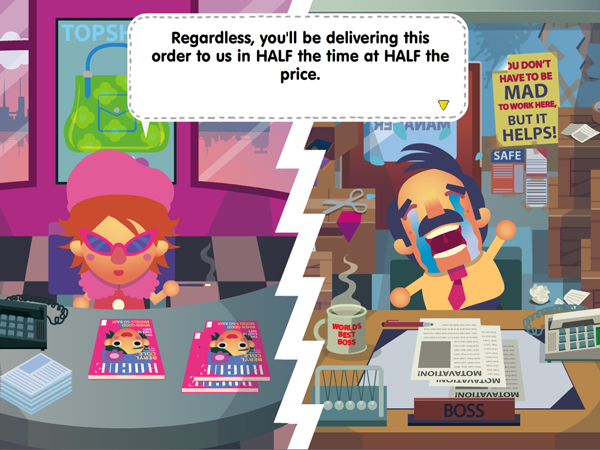
For some reason this image has found itself in this section. (Sweatshop)
I once had a conversation with a friend who used to be client side, and who is now working agency side. They found it a real eye opener. How tight things could be. The impact of changes and demands. That no one was sat upon piles of money eating Kettle crisps. They thought that all the agencies that used to work for them were actually RICH!?!?!
Anyway. Work with your chosen people. Collaborate. Establish trust. You’ve hired them for their expertise right? Therefore listen to their opinions before making any rash decisions. Be aware of budgets and what the impacts of change will be. Be prepared to descope. And this is one thing I’ve definitely learnt from adding too much in, better to do something smaller and brilliant than sprawling and meh.
Write realistic briefs, be aware of what is achievable within a budget, if your ideas are bigger than the budget find more money, don’t squeeze your agency. Don’t just take it from me. Listen to someone who actually commissioned things.
Be honest, be open. Go forth. Make beautiful things together.
Let’s make it a good place to work
Because if it isn’t, it’s your fault and you won’t want to work there either. This doesn’t mean installing a giant slide or employing an office masseuse. It’s about being able to manage people and play nicely with others. This is something we just have to learn and isn’t something many of us were trained to do, but it’s something we should strive to be good at.
It’s about looking after your employees. Hold them close to your chest (or at an appropriate distance), but allow them enough room to make mistakes. Nurture growth. Let them learn, and lean on them when you need them. Admit that sometimes they may know better. Hire people that are smarter than you. Also ones that know more about the thing you really need to know more about but don’t really want to do.
One last thing
I could go on, but I may run of internet. So instead one last thing on failing, or learning, being mildly successful, or perhaps letting go.
Knowing the right time to call quits on something, whether it be an idea, a company or a much loved pet can be tough. But it can also be the best and the right thing to do.
And here’s another thing. When things fail we also grieve. We often think about grieving for people, but for certain things the process can be similar. There’s a sense of loss, anger, of uncertainty and a search for meaning. We want to learn something from it. As Doctor McCoy once eloquently put it, ‘Turn death into a fighting chance to live.’
Sometimes things run their course and it is the right time for them to go. The honourable thing then is to come to terms with that and let them fail as gently, honestly and gracefully as possible, with as little collateral damage as possible.
After thirteen years we closed our company last year. It was hard. But maybe not as hard as I thought. The main fear was change, but at the back of your mind there was a nagging thought about failure and what it means to fail.
But of course it wasn’t failure. How could it be with those wonderful people we employed for many years, all the things they learnt, all the great things we made, the shiny trinkets we won. All the different projects and experience gained. All of it has immense value.
And if you’ve learnt, maybe it’s not so bad after all.
The post Lessons from Littleloud: Failure? What failure? appeared first on edugameshub.
]]>The post Edugames in East Africa: Interview with HeHe Mobile appeared first on edugameshub.
]]>I almost didn’t make it to The Office, HeHe* Mobile’s fashionable office in a leafy suburb of Kigali. Kigali’s roads are numbered, rather than named, and my motorcycle taxi driver didn’t recognise the address. Then on the way we were diverted by police after a block of houses caught fire, and had to wind our way round and round the hilly roads, stopping to ask for directions several times until eventually we found the place, and I was able to climb up to the second floor and meet the HeHe Team.

Clarisse, Amiri and Richard from HeHe Mobile
Founded four years ago by a team of young computer scientists and engineers, HeHe has grown to five permanent staff and five interns. They greeted me in their lovely light, open-plan offices, open to the warm breeze outside and decorated with their giant logo, funky couches and a wall covered in scribbled planning notes for their work. When I arrived they were all quiet and hard at work – an atmosphere of intense focus in the room. This is an ambitious and hardworking young company, and I was keen to find out what drives them.
Clarisse Iribagiza, their CEO greeted me warmly, and along with Amiri Mugarura, their CTO and Richard Rusa, their Creative Director, walked me through some of their recent work.
First, we looked at SOMA, a literacy app made in collaboration with A Thousand Hills Literacy, another education company based at The Office. The app is aimed at local children aged 2 to 8 and helps them in recognising the Kinyarwanda alphabet using simple game mechanics and engaging animal characters. Everything is localised, from the artwork to the music. Foreign import apps like DuoLingo are popular here, but possibly because they tend to be free from the Google Play store (relatively few Rwandans have iPhones). As Sofia Cozzolino, who was the literacy consultant on SOMA explained to me – East African customers want and need apps which contain recognisable and relevant contexts. A one-size fits all approach to apps may not work well in the East Africa region.

A screenshot from the SOMA literacy app
Then Amiri showed me a very different app – Safeboda, which is aimed at encouraging road safety in Uganda. Vetted taxi moto drivers who can demonstrate safe driving are given an electronic device which geolocates them, meaning potential customers can identify them within a certain radius and contact them to make a booking. The app works on both smartphones and the web – a lot of the work HeHe does is cross platform.
Although HeHe has created SMS-based apps for feature phone users, Clarisse is firm in her belief that it is time to take advantage of the growing smartphone user base in Rwanda and other East African countries, and to create apps relevant to the needs of East African consumers (which, as Sofia is keen to point out, can vary greatly from country to country).

An app testing session with HeHe’s code club
One of the pitfalls HeHe has found is that different app stores don’t provide a reliable revenue stream for paid-for apps as far as their local ecosystem is concerned. Rwanda’s payment systems don’t align with what most stores have to offer, and so “customers” of most international app stores in Rwanda are generally downloading only free apps. To get around this, HeHe are building their own digital content store to drive in more local content by local content developers, which integrates with the payment systems most Rwandans use, which are generally mobile-phone based. The store will open later this month, showcasing HeHe’s own apps and those of its partners. Clarisse is confident they will be able to roll out to other countries by the end of the year.
Lastly, the team showed me some of the apps created by children who were about to graduate from the first code club run by HeHe. The code club runs for six months, during which time the children learn how to design an app, create the necessary artwork and content for it, and then program in HTML5 and play test it to create a workable, useful education app or game. The results were extremely impressive, and a testament to the many hours of hard work put in by the HeHe team and their first cohort. It seems that, as well as leading the way for Edugames in East Africa, HeHe are ensuring that the next generation of educational app developers have the necessary skills to continue their work.

Graduates from HeHe’s 2014 Code Club program
*HeHe means ‘where’ in Kinyarwanda, and is a reference to the studio’s work in creating educational content which shows people where to go.
The post Edugames in East Africa: Interview with HeHe Mobile appeared first on edugameshub.
]]>The post Making educational games better through personalisation appeared first on edugameshub.
]]>The elephant in the Games Industry room
For many years now, there has been an elephant in the Games Industry room, and he’s sat right in the middle of Educational Games Corner. The elephant has witnessed many educational games being designed and developed, most of them following the ‘tried-and-true’ linear formula, presenting every user with identical content independent of their performance in previous tasks. Occasionally, the elephant raises his trunk, waggles it around to get everyone’s attention and says: ‘Linear, static games really aren’t that great for learning, perhaps someone should try something different?’ The developers would usually grumble excuses: ‘sounds hard'; ‘we’d waste time making content only a few people would see'; ‘gamers are dumb, they wouldn’t understand’. ‘Oh,’ the elephant would say, and all the developers would go back to making their normal, impersonal games.

In my opinion, the elephant makes a very good point. As educational games designers, we are very good at producing fantastic user interfaces, exciting content and engaging game mechanics, yet we are very poor at accommodating the individuality of the people playing our games. I believe that far too many educational games are made without the personalisation of the learning experience in mind, and that we could all make better games if personalisation was at the heart of our game design considerations.
But how do we make a personalised educational game?
The most natural question to ask next is how do you make a personalised educational game? I believe the most suitable approach for educational game design is to mathematically model the skills of the user. By using the actions of the user as input to the skill model, we can understand the overall ability of the user and perhaps more importantly their strengths and weaknesses by using machine learning to classify the player’s skill-set. The output of the machine learning algorithm can then be used to pick the most appropriate content for the user with respect to their current skill-set. For example, if the user is weak in a particular area, you may want to provide the user with content that will help them improve in that area. Once your model informs you that their skill levels have sufficiently increased, you can provide more general content until a weakness is identified again. The advantage is clear: the user benefits from a personalised experience tailored to their needs.

Example of a mathematical model of arithmetic learning in the Unity game engine. Each box represents a skill relevant to arithmetic learning, such as the multiplication of large numbers. Each skill is modelled using a sigmoid function, as shown in the Skill Preview window. The parameters Q, B and v determine the profile of the sigmoid. Connections between skills model the fact that the skills are related. The directed value of the connection determines the strength of the connection. For example, the model assumes that ability in multiplying small numbers will significantly aid the learning of adding small numbers, whilst ability in addition and subtraction are only considered to be weakly related.
Clearly, the design of a game using a system like the one described above would be a very different process from the design of more traditional, linear game. Firstly, since content would have to be available at any stage in the game to accommodate for the skill-set of the player, levels and narrative would have to be built in a modular, non-linear fashion. Secondly, the designer has to spend time deciding what skills are relevant to the game, and then thirdly must create a mathematical system to model player skills at runtime.
The right tools for the job
Fortunately, tools already exist to help the developer implement these tasks. For example, Twine, a non-linear story creator, can greatly simplify the process of modular narrative design and furthermore has a easily parsed file type, making integration with other platforms relatively easy. Mathematical tools such as machine learning algorithms are widely available and, importantly, easy to use without an understanding of the underlying code and maths.

Example of a machine learning algorithm being trained to analyse user skill-sets in the Unity game engine. The designer is asked to classify a possible skill-set for a user that is generated by the software. In this machine learning problem, the designer is classifying based on weak areas of the user. The user simulated above is particularly weak at addition, and so would be classified as a weak adder. This result could be used in game to provide the user with a higher ratio of simple addition questions until his addition skill levels catch up with the rest of his skills.
Personalisation is an extremely powerful tool that’s also extremely under-utilised. If you’re still unconvinced, take a couple of examples from the ‘normal’ games community: The Sims, Minecraft and The Grand Theft Auto games are all personalised games and also sold incredibly well. The method of personalisation may be different to the one described above, but the reason for the excellent player engagement and sales is the same: these games make the player’s actions an intrinsic component of the story, if not the entire story. I believe that achieving the educational gaming equivalent, to make the player an intrinsic part of the learning process, could lead to some incredible results in educational gaming, and potentially change the way we learn forever.
Tom Matcham is a mathematician and founder of coAdjoint, a middleware company helping developers to personalise the content of their video games and educational software. He can be contacted through [email protected].
The post Making educational games better through personalisation appeared first on edugameshub.
]]>The post Q&A: the team behind Teach Your Monster To Read on developing a phonics game for children appeared first on edugameshub.
]]>Tell me about the roles that each of you have on Teach Your Monster to Read (TYMTR)?

A Teach Your Monster to Read character
Jonathan: Popleaf are the core game development team, we do the programming, design, music, some graphic design, bits of everything really.
Antonio is the Usborne Foundation’s producer, and was responsible for putting the team together, representing the interests of the charity and making sure everything was on track for the educational goals and guiding the project as a whole.
Other core members of the build team included Rich Wake, who does all of the brilliant character design, illustration; Angela Colvert and Alison Colvert from Roehampton University, and Mairi McKinnon from Usborne Publishing who were in charge of our educational outcomes, plus a wide team of other people who’ve helped along the way.
So how did the project start?
Jonathan: Berbank and I were friends before. We had both started at a company that doesn’t exist any more called Creature Labs. After that, we went our separate ways, but remained friends. I was working at Jagex on Runescape during its peak, Berbank was working with Martin Hollis on Bonsai Barber, which never got the success it deserved. Around the same time we both wanted to do something new, so we sort of fell into it – we almost set up the company (Popleaf) by accident.
The TYMTR project was initiated by Peter Usborne (founder of Usborne Publishing) who with his daughter Nicola was running a literacy charity called the Usborne Foundation. They had an idea that they wanted to do a game around learning to read and decided to pull a team together to make it happen.
Berbank: We all wanted it to be very addictive, making it about fun first so children would come back to it and learn along the way, ideally without even knowing they were learning. One of the first things Peter (Usborne) said was that it had to be a game that they came back to again and again. We couldn’t have agreed more.
Jonathan: The majority of educational games are quite drab. Often, they don’t feel like a game, there is no sense of joy. The intentions are clear but it’s very dry “you’re going to do this now because I say so” rather than “you are an autonomous being who might want to do this…”.
Berbank: We were lucky to work with some good games companies before, but this really was a dream project we couldn’t refuse.
Jonathan. We felt if we were going to spend so much time doing something, we wanted it to be worthwhile.
Berbank: And it has been. It’s so rewarding to see kids eyes light up playing a game like this. We both had trouble at school, so it is a privilege to make a game for children who have similar difficulties.

The TYMTR team discuss the game
Antonio: One of the things that was interesting about this project was that Usborne didn’t go to an agency but instead hired independent freelancers which is quite a different model. By hiring independent people there’s been a much stronger and longer term connection with the project.
But then it was about putting that team together. There has been a really long process of finding people, sifting through them, finding the best. Ended up speaking to over 20 people for the roles that become Popleaf, and also worked with Margaret Robertson (another independent game designer). We looked at over 200 illustrators to find Rich, and easily 100 voiceover artists to find Simon Farnaby.
Tell me about the process for developing TYMTR
Jonathan: what we started off with was totally stripped down mechanical prototypes with the idea being that if a kid would enjoy those they would really enjoy a richer version. Particularly in children’s games, I think, a lot what makes it something that’s fun is not just gameplay in a traditional sense – a lot of it is the heft, the texture, the colour, the sound, the substance. People talk about making things ”juicy”, so every action has a really nice reaction, making everything very immediate. But if you prototype with all that stuff in you can easily lose sight of whether that underlying mechanics are any good.
Berbank: We were incorporating the educational aims from the very beginning so we could make sure they were fun. They had to meet the requirements we were getting from our excellent educational advisors at Roehampton University and from experts within Usborne Publishing.

An early prototype of the “Run” game
Antonio: Some of the minigames are exactly the same as the first prototypes but some are completely different. One of the games
called “Run” had number of prototypes, four entirely different versions to get it right. Even then, some kids were struggling to pick it up. However, once they understood it they really loved it. We had to have a bit of a leap of faith that even though they wouldn’t get it straight away would work. It needed a bit of time to get right
Berbank: There was a lot of watching how the children were playing the games and what sort of difficulties they were having. With ‘Run’ in particular we had some difficulties conveying information to them properly, and it took a number of iterations to work out something that was clear, particularly given the speed of the game. They also struggled with the accuracy of the jump, but they were keeping at it, because that was a struggle they enjoyed. Once they’d mastered that, their sense of accomplishment was huge. Had we not had the patience to wait that out, we might have removed that game. Those are two different issues to tease apart from a player who isn’t necessarily consciously aware of why they like certain parts and not others.

The released version of the “Run” game
Jonathan: There is a particular way of teaching Phonics in phases in the UK. We followed that, so the first game covers phases 2 and 3, the 2nd game phase 4, and so on. The difficulty was not in deciding what to teach but how we were going to teach it.
We were lucky to have teachers on hand in numerous design meetings so we could turn to them to tell us how they teach things in the classroom. English is a confusing language, and I don’t think any of us really understood that until we had to really study it. I think, in designing educational games, having teachers available, and ideally in design meetings, is essential. We couldn’t have done it without their help.
Antonio: Building on what Jonathan said, I should mention that even before teachers were involved we had Roehampton University involved. They were ex teachers, it’s a teacher training college, so they are really knowledgeable about the pedagogy . They gave us a scheme of work that kids need to get through. So they gave us a curriculum of stuff and we had to push them really hard to find out what the balance of that should be, for example how many times should you practice this over that. They didn’t like being pinned down but we needed them to do so. They’ll say, in a letter and sound matching game, you want to see two letters on screen, then you hear a sound and to select the right letter, then Jonathan and Berbank went away and said ok we’re going to do this with a sheep game and you have two pens and want to take the sheep into one or the other. So to their specifics about the educational mechanics we bring the game aspects.
Jonathan: There were lots of moments where we needed to go back and restructure, particularly around which order to have things in e.g graphic then sound then graphic. But then making it interactive is the challenge – there are only so many ways you can represent matching a grapheme to a phoneme and make it fun.
Antonio: One point to mention, we’re using the terminology “teach” but there is actually a debate about how much of this is teaching and how much of it is practising. We try to concentrate on practising. We do introduce stuff but most of the time kids are actually practising over and over again. Teachers told us that it’s not the teaching but it’s kids doing it again and again and getting that automaticity that’s the key. Kids might get some of these things the first time but will forget them – our game helps them to remember.
Berbank: Another thing to consider was the motor skill level for what are mostly 5 year olds. What do they see on screen, is it enough but not too much? Is it accessible to them? Some children had a little trouble with the mouse and we discovered quite early on that dragging and double-clicking weren’t going to be options.
Antonio: When I did the initial competitor research on apps for learning to read, I was staggered. I couldn’t find an app that didn’t have some information that you had to already be able read to use it. It’s not actually that hard to make stuff comprehensible. I don’t think it’s such a huge UX challenge to make sure things are done vocally in a way that children understand
Jonathan: Children’s games do have a tendency to over instruct.
Berbank: So we developed a visual language.
Jonathan: TYMTR has common visual cues throughout. Games have a tendency to treat children as idiots, but kids are happy to experiment so long as you create a world where they can try out the controls without it costing them anything. You don’t want to have too many fail conditions as it’s upsetting and negative and demotivates them.
Berbank. We wanted to make the fail conditions funny, or at least fun.
Jonathan: …and make them loop round, so you just go back to the end of the current section and do it again. This makes the cost of not knowing how to play much lower, if it’s low enough kids are emboldened. Or at least, that’s what we try and do, I’m not sure we do it as much as would like, maybe with the third game.

The Space Race game from TYMTR
Antonio: Jonathan and Berbank have shown a real sensitivity to that. In the sheep game, for example, when you get it wrong the sheep just run away and it’s funny. Although, one worry is that kids will get it wrong intentionally, and that played out a bit with the prototypes but we fixed it. You have to work on this to get it right and it’s those tiny things that make such a difference.
Berbank: It also means we can maintain a level of control through all aspects of the design and development.
Jonathan: For example, we can be in the studio with the voiceover artist so we can give immediate feedback, because we wrote it, we know it so well. For this project, it was the only way we could have built it.
Antonio: So it feels more like a startup than a commissioned project. In the past, projects have suffered because the publisher / commissioner has been responsible for marketing and engagement, it’s gutting when you spend a lot of time on something but aren’t in control of helping to get it out there. But on this we’ve had control on that as a team so have had time to develop that.
Tell me more about the marketing you did, what worked and what didn’t?
Antonio: So our first marketing plan was, OK there are about 800 things that we could do, so let’s try all of them. We tried lots of dfferent things and were really agile. Some things worked and some didn’t. For example, everyone said go for the mum bloggers, but it didn’t work at all, for reasons that seems obvious now.
This is a service that has a game at it’s centre, the service helps children with their reading. That’s very important to understand. Most usage from teachers setting up kids on it and using throughout the year. Teachers provide us with most of our game play, 50% of people who sign up to the game sign up because they’ve heard about it from one of those teachers.
Everyone has to go to school, but not everyone gets engagement at home, so for those kids who need it most we needed to get it into schools, especially to teachers.
It took a while to learn this, we had to get enough people signed up and had to get analytics in order (but this was really hard, there was so much data coming through) but we’ve done that now and have a model for how it works. Teachers tell parents. Also, mum bloggers are so saturated.
Jonathan: Could the reason be that because we built the game around the existing curriculum and tools that help them, it make their lives easier? Whereas a lot of games don’t do that.
Antonio: When we started we didn’t have a community manager and instead relied on tweets from people we know, some emails and a bit of PR. Didn’t have much but it got into a few educational journals etc, and just built and built very slowly. Then we got our community manager Dannie Price involved who’s rocket boosted that process to make sure we’re being responsive to people replying on social media.
With games sales, you often see a massive spike at the beginning, but our game, starting with no-one and building from there, when you take out the effect of the school term, it goes up in a linear fashion. But it is actually quite tied to terms, you get lots in 1st, more in 2nd, less in 3rd. So we’re just trying to help that along.
Where next for TYMTR?
Jonathan: We’re still in the very early stages on game three, which is going to cover phase 5. It’s a really weird phase because in a lot of way it tears up the rule book as kids have known it up to that point. Phase 5 seems to say, well, all that stuff we told you earlier, here are all the exceptions. There is a huge volume of extra content, filling in the gaps. So we need to make a game which is far more playable over a prolonged time.
Hopefully, it’s going to be more like a thing you come back to weekly and it will always present you with a fresh challenge. That’s going to be a big challenge, a hugely difficult thing to do. Also, just finding a way to communicate all this content in a way isn’t going to terrify or bore children.
Are phonics still a bit controversial?
Jonathan: I know it’s effective for a number, and presumably a large number of children, but it would be a bad idea to say it’s the only way to learn as clearly different children have different needs. We’re building a game for children who learn well this way. Personally, I really struggled with school, and never went to university because by the end of school I was convinced I was incapable. So, I know for someone like me it would have been very useful in terms of building confidence.
Antonio: I would have said exactly that. For me the two problems that people have with phonics are not really about phonics, but are really about teachers not being given the freedom to teach in the way they feel is right for that particular child. This is a tool to be applied in a way for those kids that it works. People also think it doesn’t take into account a love of reading, but this is the Usborne Foundation. No-one could accuse them of not being about kids of love of reading.
Jonathan. We’re not tubthumping for phonics, certainly. Something that sticks in my mind was testing the 2nd game in quite a disadvantaged school. There were two kids who were difficult to teach kids, and the teacher said he’d never seen them sit still and engage for so long with something, ever. Regardless of how you feel about phonics, sitting down and engaging with practice, drilling in this way, can’t be anything but good for them.
Berbank: Even if they aren’t getting it right, getting exposure to the letter sounds over and over again is useful.
What would be your one piece of advice or main lesson that you’ve learned from creating TYMTR?
Jonathan: Well, one thing this project embodies is the spirit of iteration.
Berbank: Certainly getting experts in their field, right from the beginning has been incredibly useful. The teachers we worked with were – and are – invaluable, particularly Matt (at Snowfield).
Jonathan: Don’t assume you understand education, without getting those people involved all the way along, on the end of the phone.
Berbank: Also listen to the children. If you ask them leading questions they will give the answer you want, but not necessarily the answer you need. If you spend the time to just listen, watch them play, and don’t interrupt, you will learn so much more.
The post Q&A: the team behind Teach Your Monster To Read on developing a phonics game for children appeared first on edugameshub.
]]>The post Fantastec: Finland’s hottest edugames startup raises 825K appeared first on edugameshub.
]]>Hi Juha. You are the CEO of Fantastec. Could you introduce yourself and your company to us? What made you decide to create educational apps?
I am the CEO and founder of Fantastec, a Finnish startup game company. Fantastec was originally started because of a lady Actually a very young lady, my 5-year-old god-daughter Ella, who played an online game with very negative content. I was a teacher at the time, and that incident inspired us to bring families better alternatives: Our mission and passion is to bring more fun for kids and more value for parents with visually beautiful, fun and educational multiplatform games. Our team combines Finnish educational and game development expertise, which are among the best of the globe: Finland’s education system is among the best in the world (according to OECD’s PISA tests) and Finnish mobile game companies are dominating app stores, for example Supercell’s Clash of Clans is worldwide smash hit and Rovio’s Angry Birds has more than 1 billion players. So our small country has lots of knowledge and professionals related to this particular business area.

Fantastec’s Wonder Bunny Game
Can you introduce some of your products and the philosophy behind them?
As Trip Hawkins, the founder of Electronic Arts, said a couple of days ago in Finland at a startup event, there are still very few kids games with real value. We want to change the situation: Fantastec develops visually beautiful, easy to use and safe kids’ games, which are fun for the player and bring real learning value for both educators and parents. The motivation for kids comes from doing fun things: when kids do what they love (and kids love games!), then fantastic learning results will be achieved.
We currently have 6 multiplatform games published under Wonder Bunny brand name: Wonder Bunny Animal Friends helps kids to learn about nature and animals, Wonder Bunny ABC race is about learning the alphabet while racing, and Wonder Bunny Math Race – as you can guess – is about mathematics and includes own game versions for preschoolers, 1st, 2nd and 3rd graders. These games follow the Common Core curriculum
The main idea of Wonder Bunny learning games is simple: kids modify and help their superhero characters – Wonder Bunnies – to grow and learn new skills. The motivation comes from gaining fun super powers and wacky vehicles like a flying rocket-powered sledge. While helping their game characters learn, kids themselves learn math, general knowledge and more, all within a safe and entertaining environment.
Unusually for a CEO, you have a masters in economics and a bachelor’s degree in education. Are these the perfect qualifications for an edugames company CEO?
If not perfect, quite near it Business background is of course important in order to manage and grow the company, and educational background is crucial in order to understand what kind of games we should produce for our target audience.
Fantastec has recently raised seed investment of 825,000 USD – congratulations! That’s a big round for an apps developer, and unusual in Europe at the moment. How did you manage to persuade investors to come on board and what would you advise others who are trying to raise angel investment or seed capital?
Getting an investment is a combination of lots of things, like hard work, connections and good timing. We already had very good beta stage numbers from our educational online game world Polar Heroes, and the plan to re-produce the best content of that online world as Wonder Bunny mobile games interested investors. Now we are publishing Wonder Bunny games which also have impressive early stage metrics, and starting an even bigger investment round to scale the business. Investors want to see that the company has solid early stage business and has the ability to scale for international markets. Getting investment also requires lots of hard work contacting and pitching to potential investors, and this takes lots of time and energy!

Artwork from the Polar Heroes game
Finland has a reputation globally as a country with an excellent education system. Would you say this is true, and do you think this expertise spills over into the edtech sector?
This is definitely true, and this is also beneficial for us, since Fantastec combines Finnish education and game expertise. Actually there are lots of edtech startups bubbling under in Finland, so you will probably hear more interesting news from the region!
What are your plans for the future of Fantastec?
As I said, we are preparing for a new investment round. The funding is used to boost both development and sales operations. We have several fun and educational Wonder Bunny mobile games on the pipeline. In the long run, we aim to be among the leading educational games publishers on the globe. Big target, but we have the skills and motivation to aim high
The post Fantastec: Finland’s hottest edugames startup raises 825K appeared first on edugameshub.
]]>The post We need to talk about failure in games appeared first on edugameshub.
]]>So when I was looking for a subject for an upcoming #LEGup (the London Educational Games meetup group) session, it seemed like a natural topic. What could we learn from failure in the business of games, and in game development? Is it possible to make it a useful and natural part of the process?
At first, I posted the session and put a call out through our Meetup page for speakers. Nothing. I began to wonder if putting the event together might be harder than I thought and if the games industry perhaps hadn’t yet gotten to grips with talking about things that go wrong. I began to wonder if our fail session might itself fail.
Approaching people directly was more successful, but hard to do.”Hi, I know you to be a failure, come tell everyone about it!” is not a great opener. But thankfully people got where I was coming from and didn’t apparently take it too personally, and I got three fantastic speakers.
I think all our LEGup speakers this year have been great, and if you don’t believe me, check out our YouTube channel. We’ve had invaluable advice on crowdfunding, Cat Spanish, a surprising academic defence of chocolate covered broccoli and more. But even in this great company, there is something really special about hearing honest, open accounts of things that have gone wrong and what people have learned from them. There is something painful, humorous and hugely informative, a sense of “wow, I’m glad that wasn’t me, and now I know how to avoid making the same mistake”. Or alternatively, “oh s&@!, that is me, I’m about to walk into exactly the same catastrophe, thank God I heard about this now before it was too late”.
And our three speakers more than delivered, as you can see from the videos embedded in this post. Alex Warren told us how he quit his boring job to pursue his side project, textadventures.co.uk, and see if he could make it profitable. To cut a long but entertaining story short, it didn’t work out. He tried all kinds of things, and here shares what he learnt from the whole experience.
Annette Mees is one of the co-directors of Coney, an agency which creates experiences that are somewhere between theatre and game design and that are highly participatory. To hone the production they go through a very iterative process, constantly putting things that they know may not work in front of an audience; a process that Annette said still made her feel a bit ill every time, but which is invaluable for creating a polished final experience.
Our last speaker was John Davison . I felt a bit bad when I asked John to speak. I knew his agency Kanoti, who had produced all kinds of beautiful animations and games, had suddenly closed down at the beginning of the year, but I didn’t know why. I suspected it might have been painful, but also that it would be an important story. John told us what had gone wrong, in a very open and honest way, with many lessons for anyone working in the creative industry and looking to set up a business.
We had great feedback from people at the event: one person said it was the best #LEGup yet. However, it was one of our least well attended events so far – no doubt partly because it was half term, but perhaps also because, as one person said in the pub afterwards, “when I saw the theme I thought it might just be a bunch of losers.”
Clearly, none of our speakers are “losers”. And I happen to know that lots of brilliant people at our meetups, and in the games industry, have at some point “failed”. They have failed to make money, failed to get critical acclaim, failed to get the audience numbers, failed to even get a project launched. I know I have, on some projects. So, why are we so uncomfortable talking about failure? Why aren’t we better at sharing the lessons we learn when something goes wrong?
I appreciate that people doing commercial work might feel they have to always give the impression that they are super successful to potential clients. But we’re amongst friends, right? Let’s talk more about the mistakes we’ve made or the pitfalls to watch out for, and help the whole industry avoid doing the same.
The post We need to talk about failure in games appeared first on edugameshub.
]]>The post Running a hackday: remixing it with Redwire appeared first on edugameshub.
]]>I’m used to presenting at conferences, but this is the first time that I’ve run a hackday. Before the hackday itself, I had proposed a challenge that I wanted people to take on. The hackday started by grabbing a table and presenting the challenge in a just a few words. After that point anyone could show up to the hackday, sit down at your table, and join in.

Teaching how to remix games using RedWire at the hack day
I find that there’s something special about a hackday or hackathon that you don’t find in a more traditional conference. You can form a deeper and more direct relationship with people through working together rather than just talking. At the start I was essentially teaching them RedWire. But once people got off the ground and began implementing their own ideas, I was genuinely interested in what they would come up with and helping them in any way I could, which is a lot more fun for everyone than just going through a pre-hashed tutorial.
I found that the hackday was a great way to get immediate feedback from users, because you see them struggle with accomplishing something, and you hear what kind of ideas they have for the project. On the other side, I think that it’s a great format for the “audience”, because it gives a hands-on way to learn something new. And once again, it’s a chance to apply their creativity in a new way. There were a good number of projects, so people could bounce around from one to another, exploring whatever interested them most.

The hackday challenge
The challenge is a critical element to get right. It has to be short, doable by a general audience, and let the audience bring something of their own. My challenge was “Remix it with RedWire”, which was to take an existing game on the site, and change it to do something else. I picked this because it is a basic use case of RedWire, but also because it lets them be creative. I thought that a challenge based solely on playing games would miss the point.
Since I knew that the Citizen Cyberscience Summit doesn’t usually attract a lot of game developers, I did a bit of advertising on my own. I searched through game-related groups on meetup.com and found those that could be interested in an event around RedWire. From there, I wrote the meetup organizers to tell them about the event and ask if they would send on the info their group. In the end, about 3 people showed up from these meetups, and I also got to find out more about the London game scene. I think I could have done even better had I prepared this a month in advance instead of just the week before.

Stupendous Side-Scrolling Space Shooter screenshot
The game that I had asked the audience to remix was “Stupendous Side-Scrolling Space Shooter”. As the name aptly suggests, it’s a space battle game inspired by classics such as Galaxian or Raiden, where the goal is to hit the enemies coming at you with your lasers.
The biggest surprise came from Ad Emmen, who is not actually a game developer, but who nevertheless took the challenge all the way to the end. He works on volunteer computing projects that run when the computers are idle to contribute to scientific projects. He created a fork of the spaceship game, called “Shoot sleeping computers and earn professor hats”, in which the player destroys wasted computer cycles in order to maximize volunteer computing power! He turned the aliens into computer waste, and he added a point system on the left. Pretty cool!

Shoot sleeping computers and earn professor hats screenshot
We got some great feedback from the audience, suggesting that “rapid prototyping” would be a great use case for RedWire. This would be an interesting angle. Indeed, a lot of developers use Game Maker in game jams because they want to get something up and running quicker. If RedWire lets them do that quicker, if could be especially useful for them.
Another suggestion was to run a “Improve My Game” competition, in which everyone tries to remix a particular game to make it better. I love the idea, which reminds me of the Gamify Your PhD competition.
So in the end, I found that the hackday was a great format for getting feedback on the project and for connecting with new people. In the future, I’ll look for ones that attract more game developers, who would take less coaching to learn how to use RedWire. Since this was my first hackday, there was a decent amount of preparation involved. But future events will be a lot quicker to prepare.
You can follow Redwire on Twitter and on Tumblr.
The post Running a hackday: remixing it with Redwire appeared first on edugameshub.
]]>The post Q&A: Preloaded discuss their acquisition by Learning Technologies Group plc appeared first on edugameshub.
]]>Why LTG Group and why now? Have you been open to acquisition for a while? Were you waiting for the right partnership?
Preloaded has had a great couple of years. Our clients are progressive and forward thinking, the team is super talented, our output is strong and our global reputation growing. The backdrop to this is a buoyant and growing ‘non entertainment games’ market.
Last year we sat down and made a plan to capitalise on where we are. We wanted to continue to make great games, to diversify our team’s skill sets, apply our methodology to new ‘games with purpose’ and take our business to the world. The big vision was to become the best applied games studio in the world. My personal ambition; to become the IDEO of the games industry, which continues to perplex and inspire people in equal measure.
Big aims and a global ambition meant partnership, investment or acquisition. So we began looking for the right fit – a fit that could bring new expertise, that could bring a pipeline of work and that could give us a platform to become a truly international company and, crucially, one that understood and respected our culture.
On paper LTG seemed perfect. A group already operating in the ‘learning’ space and sister companies bringing new clients and tangible need of our skills. In person Jonathan and his team sealed it, bringing an enthusiasm for our work and experience in growing successful companies globally.
The move is a big step for a company we’ve kept independent for 14 years, but feels right given our ambition. Most importantly the business is ready for it.
LTG Group has Epic and LINE in its roster – both firmly positioned in the corporate e-learning market. How does Preloaded, with its very different focus and client base, fit into this roster?
LTG’s ‘buy and build’ strategy is to acquire companies which bring new complementary capabilities and/or territories to the learning group. The Preloaded acquisition brings award-winning games-based learning capability sitting alongside the sister companies specialisms of e-learning, learning platforms and learning technology consulting.
Whilst we will continue to maintain our brand and push our games with purpose to the world, working alongside two of the largest e-learning companies in Europe is one of the reasons why we wanted to do the deal!
When I worked at LINE (Kirsten) we tried hard to get our corporate clients to use more games, but only a few sectors were interested (this was 3/4 years ago). Do you think the market has changed? Do you plan to make games for big corporates in the future?
The use of games in training is of major interest to us. The challenges involved in getting good games into the corporate training space are akin to those faced putting games into education ~5 years ago. The legitimisation of games as powerful tools for learning, the upgrading of corporate infrastructures, the pervasiveness of mobile devices, and the mainstream use of games in society means quality games can play a major role in the training space, and we firmly believe the time for disruption is now.
The corporate imperative to be the best and most productive will also drive innovation. The niche audiences and subjects tackled in training, coupled with the emphasis on authenticity paves the way for many exciting opportunities in VR, and something we are firmly committed to exploiting.
How will the buy out affect things for Preloaded staff? Will there be any changes?
We have a highly motivated and talented team who joined Preloaded because of our ethos, passion for the kind of work we make and the culture we cultivate. None of that will change.
That said, there would be no point doing this if there weren’t changes, and we can see some great benefits for the team. LTG will give us the opportunity to grow the teams, which offers great personal development and career progress opportunities. National and international travel and secondments will also be available, giving opportunities to work in New York, Rio de Janeiro and Sheffield!
We’re also looking forward to collaborating with new people and job roles in the group, with fresh approaches and forward thinking attitudes to games. LTG advocates a merit based salary and bonus schemes which the team will also benefit from, as well as a group share scheme to give staff a real sense of ownership.
One of the biggest motivating factors for making this move was to find a good home for Preloaded in which it could flourish. The same is true for the team.
What opportunities do you see in the future that you couldn’t have contemplated before?
The acquisition makes Preloaded the game design capability for group, with offices in Brazil, US and (soon) Asia. Our strategy is to become the leading applied games studio in the world. The move gives us the reach and connections to global clients, so we’re well on our way.
Nervous excitement is the best way to describe how we’re currently feeling.
Would this be the right move for every agency? If so, what’s your advice for other agencies looking to be acquired?
Moving from being an independent was a major step for us, but actually quite an easy decision to make. Our strong profile (aided mainly by our Amplify work) coupled with the market opportunity just meant now was THE time to do it. My only advice is to know what you want, understand how to get there and then run at it.
The post Q&A: Preloaded discuss their acquisition by Learning Technologies Group plc appeared first on edugameshub.
]]>